
Veteran Service Dog Program
Honoring those who served — a structured owner-trained service dog program at no cost for qualifying Texas veterans living with service-related PTSD, MST, or TBI.
Veteran Service Dog ProgramMore Than a Companion. A Lifeline.
For individuals living with disabilities, a properly trained service dog can provide meaningful support, increased independence, and greater confidence in everyday life.
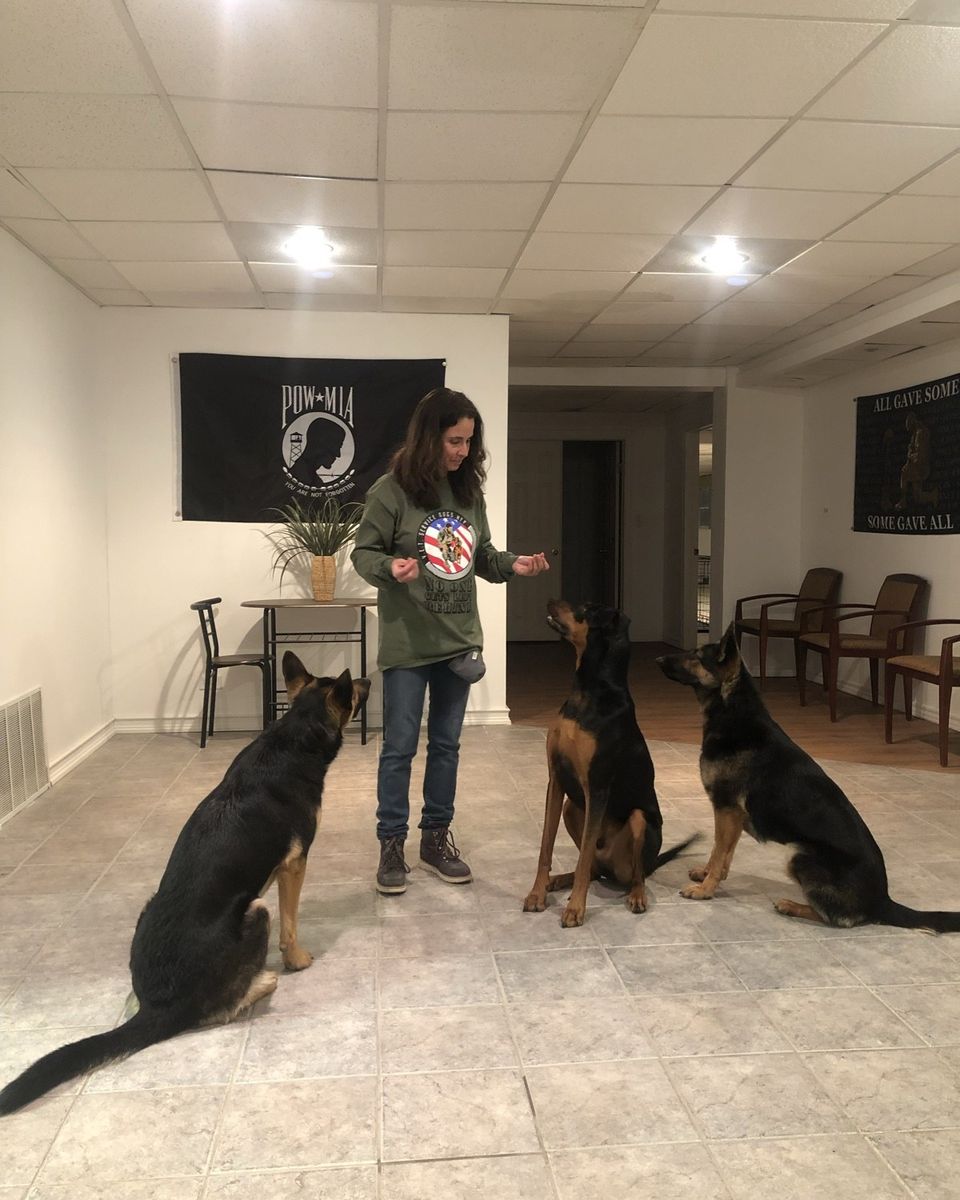
I have worked with people who once felt unable to leave their homes alone. Through structure, training, and partnership with a service dog, they were able to regain confidence navigating public spaces, attending appointments, running errands, and participating more fully in daily life.
A service dog does not replace medical care, therapy, or treatment. Instead, it becomes another tool in a person's toolbox — offering practical support, stability, and assistance navigating everyday challenges.
A service dog is individually trained to perform specific tasks that mitigate a person's disability.
These are not emotional support animals or comfort pets. Service dogs are highly trained working dogs taught to remain calm, neutral, and responsive to their handler in real-world environments.
Depending on the individual's needs, a service dog may be trained to:
Every service dog is trained specifically for the individual handler's needs, lifestyle, and goals.
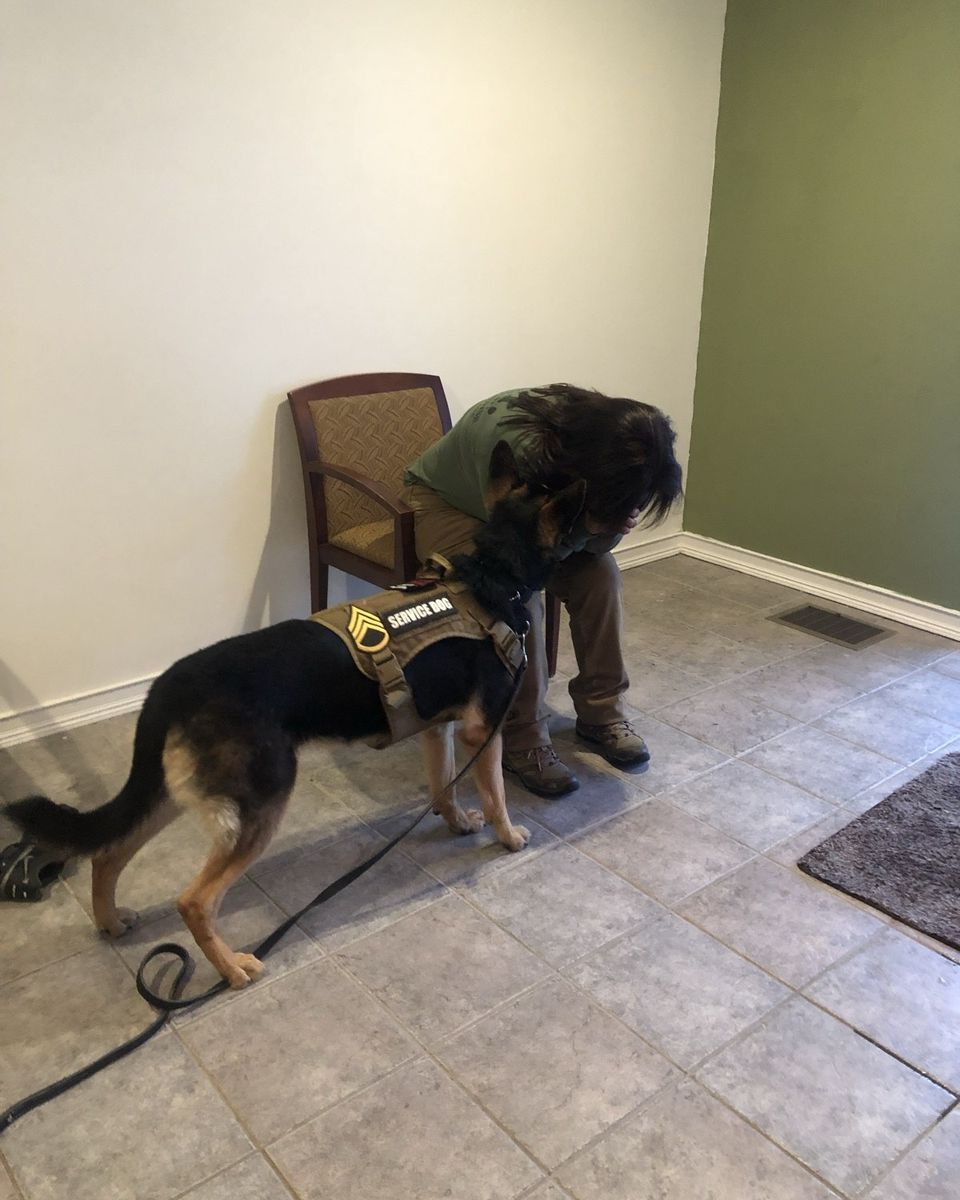
Deep Pressure Therapy (DPT) is a trained task some service dogs may perform to help individuals experiencing heightened stress, anxiety, panic, or emotional dysregulation.
Using firm, controlled physical pressure, the dog may help provide grounding and regulation during difficult moments. For many handlers, this task becomes an important part of daily support and stability.
This is not a pet training program.
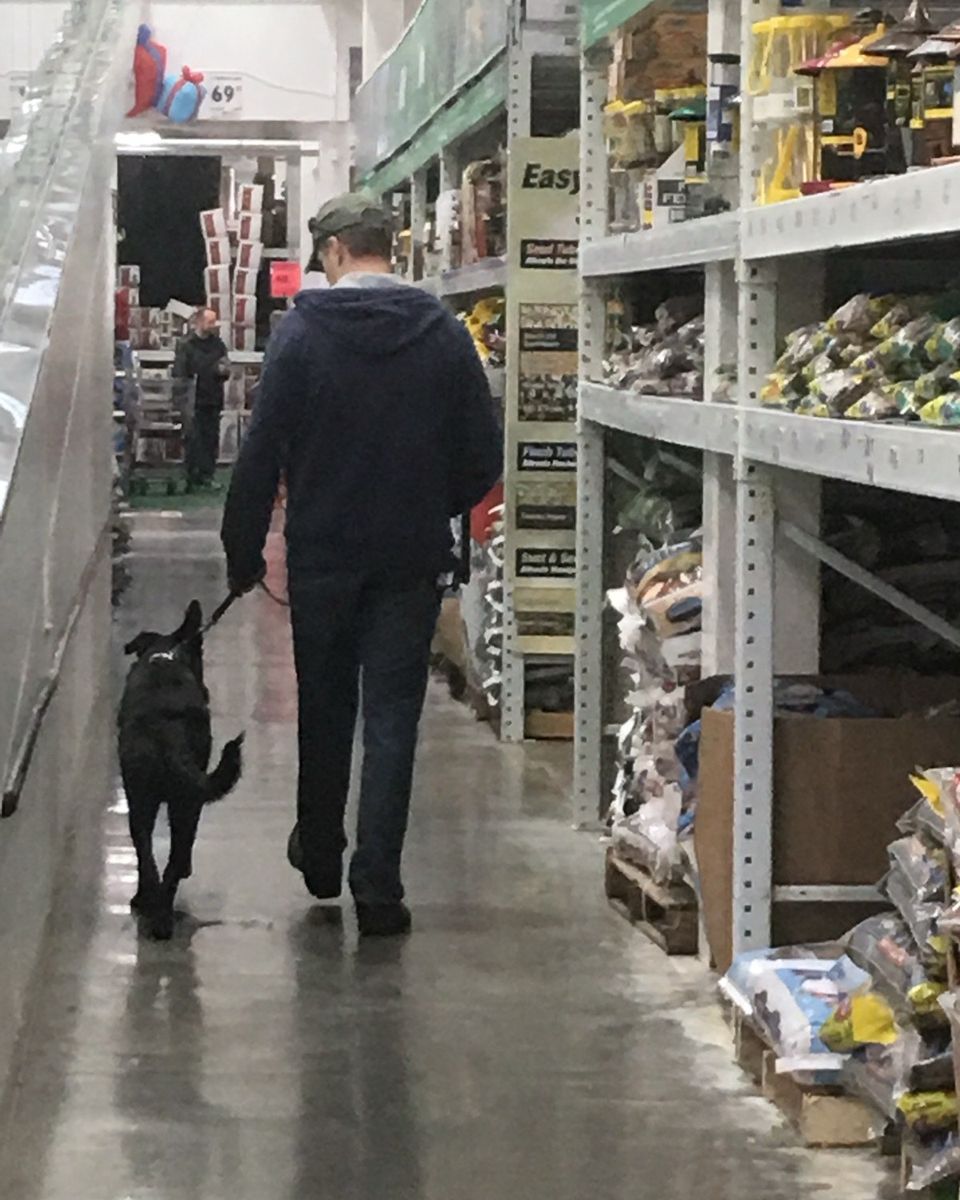
Service dogs are expected to remain calm, neutral, and responsive in public environments filled with distractions, movement, noise, people, and other dogs. They must be able to work safely and appropriately while remaining under control at all times.
Under the Americans with Disabilities Act (ADA), service dogs are dogs individually trained to perform tasks that mitigate a disability. Emotional support animals, therapy dogs, and comfort animals do not qualify as service dogs under the ADA.
I do not train the dog for you.
I teach you how to train and work alongside your own service dog, creating a reliable partnership built through communication, consistency, structure, and trust.
I specialize in task-based service dog training to support individuals living with:
Training is always tailored to the individual handler, their environment, and their specific needs.
A legitimate service dog must be able to function calmly and safely in real-world environments — not just inside a training facility.
Training may include structured exposure to:
The goal is not simply obedience — it is neutrality, confidence, reliability, and appropriate public behavior.
Service dog training is a demanding, long-term process requiring patience, consistency, structure, and active participation from the handler.
Not every dog is suited for service work.
Temperament, confidence, emotional stability, environmental neutrality, resilience, and trainability all play an important role in determining whether a dog is an appropriate candidate.
No ethical trainer can guarantee service dog success.
When the right dog, the right handler, and proper training come together, a service dog can become a powerful source of support, stability, confidence, and independence.
Honoring those who served — a structured owner-trained service dog program at no cost for qualifying Texas veterans living with service-related PTSD, MST, or TBI.
Veteran Service Dog ProgramPrivate service dog training for individuals with disabilities — professional guidance in developing a legitimate, task-trained service dog for real-world reliability.
Owner-Trained Program